AI Robots in 2026: Meet Mobo and the Technologies Transforming Humanoid Robotics
Artificial intelligence robots are moving closer to practical, real-world applications. From intelligent home companions to humanoid robots trained in virtual environments, the robotics industry is making progress in areas such as human-robot interaction, spatial awareness, and autonomous task execution.
Recent developments include the upcoming introduction of AiMOGA Robotics’ Mobo companion robot, new simulation-based training methods from DexForce, and advanced 3D sensing technology designed to help robots understand their surroundings more accurately.
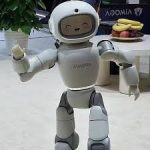
- AiMOGA Mobo: An AI Companion Robot Designed for Families
AiMOGA Robotics is scheduled to unveil Mobo, its first family companion robot, on October 21, 2026. According to the company’s announcement, global pre-orders are expected to begin on the same date. Pricing and final delivery details have not yet been confirmed.
Source: AiMOGA announcement via GlobeNewswire
Mobo is designed to bring AI-powered interaction into everyday family life. Its announced capabilities include:
Voice interaction: Communicating with users through natural spoken conversations.
Visual recognition: Identifying objects and interpreting elements of its surroundings.
Daily reminders: Helping users keep track of activities and schedules.
Long-term memory: Supporting more continuous interactions by retaining relevant conversational context.
Educational applications: Exploring ways to support learning and engagement for children.
The development reflects a broader industry trend: building robots that can do more than move or respond to commands. Future home robots will need to understand context, communicate naturally, and operate safely around people.
However, real-world performance remains an important consideration. Battery life, reliability, child safety, privacy protections, and the ability to handle unexpected situations will all influence whether companion robots become practical household products.
- DexForce Uses Virtual Training to Advance Humanoid Robots
Another important development comes from Chinese robotics startup DexForce, which is exploring simulation-based training to help robots learn tasks more efficiently.
According to a Reuters report published on October 15, 2026, the company uses virtual environments to train robots before deploying their learned skills in the physical world.
Traditional robot training can require extensive physical demonstrations, repeated experiments, and large amounts of real-world data. Simulation offers an alternative by allowing developers to create many virtual scenarios, adjust environmental conditions, and test different tasks without repeatedly using physical hardware.
A typical simulation-based workflow involves four stages:
Create a virtual environment: Reproduce a task or workspace digitally.
Train the robot: Let the AI system practice in simulated conditions.
Transfer learned skills: Apply the trained model to a physical robot.
Evaluate real-world performance: Identify errors and refine the system.
This approach could reduce training costs and accelerate development. Nevertheless, a major challenge remains: simulated environments do not perfectly reproduce real-world physics. Differences in friction, lighting, object weight, and unexpected obstacles can affect a robot’s performance after deployment.
- Hesai’s Kosmo 3D Camera Targets Better Robotic Perception
Hardware innovation is also playing an important role in the evolution of intelligent robots.
On October 14, 2026, Chinese technology company Hesai introduced its Kosmo spatial camera, which combines camera technology with LiDAR sensing to capture three-dimensional information about the surrounding environment.
Source: Reuters — Hesai launches spatial camera for AI-powered robotics
Spatial perception is essential for robots that need to navigate complex environments, recognize objects, or interact with physical items. By combining visual information with depth measurements, 3D sensing systems can help robots estimate the position and shape of nearby objects more effectively.
Potential applications include:
Humanoid robot navigation
Object detection and manipulation
Industrial automation
Spatial mapping and environmental understanding
Data collection for robotics AI training
However, sensors alone cannot make a robot intelligent. Their effectiveness depends on how well perception hardware works with AI models, motion planning, and decision-making systems.
Why AI Robotics Is Becoming More Important in 2026
These developments highlight three major trends shaping the robotics industry.
First, robots are becoming more interactive. Companies are working to make human-robot communication more natural through voice interfaces, visual recognition, and contextual memory.
Second, robot training is becoming more data-driven. Virtual simulations can expose AI systems to a wider variety of situations before they encounter them in real environments.
Third, spatial perception is improving. Advanced cameras and LiDAR-based systems are helping robots build a more detailed understanding of the physical world.
Together, these technologies could expand the role of AI robots in homes, factories, warehouses, education, and other environments.
Are AI Robots Ready for Everyday Use?
Despite rapid progress, widespread adoption will depend on more than impressive demonstrations. Consumers and businesses will need robots that are reliable, safe, affordable, and capable of completing useful tasks consistently.
Key challenges include hardware costs, battery performance, autonomous decision-making, data privacy, and the ability to recover from unexpected situations. For home companion robots in particular, safety and transparent handling of personal information will be essential.
The introduction of new products such as Mobo may provide a clearer picture of how companies plan to address these challenges. Its announced features and real-world performance will be important indicators of how close AI companion robots are to becoming practical household assistants.
Final Thoughts
The latest developments in AI robotics demonstrate that the industry is moving beyond humanoid appearances toward more practical capabilities. Companion robots such as Mobo aim to improve everyday interaction, simulation-based training could make robot development more efficient, and 3D sensing technologies may help machines understand physical environments more accurately.
The next major milestone will be proving that these technologies can deliver reliable performance outside controlled demonstrations. If manufacturers can combine useful AI capabilities with safety, affordability, and dependable operation, intelligent robots could become an increasingly important part of everyday life.
Source: Reuters — DexForce trains humanoid robots using virtual data