 admin
admin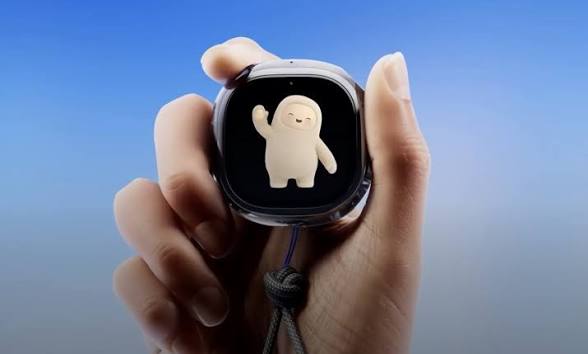
The Tiny AI Gadget Designed to Go Beyond Smart Glasses
Meta is taking its personal AI assistant beyond smartphones and smart glasses with a surprisingly small device: the Meta Muse Charm.
Unveiled during Meta Connect 2026, the Muse Charm is a compact AI gadget designed to give users a faster and more natural way to interact with Meta’s Muse personal AI agent. Small enough to carry in a pocket or attach to a keychain, the device represents Meta’s broader attempt to make AI available wherever users are, without requiring them to constantly reach for a smartphone.
Unlike a conventional smart accessory, the Muse Charm is being designed around the AI assistant itself. The hardware is essentially a dedicated physical gateway to Muse, giving users a more immediate way to talk to their AI agent and interact with it throughout the day.
What Is the Meta Muse Charm?
The Meta Muse Charm is a small, handheld AI device built specifically for Meta’s Muse personal AI agent.
Meta describes it as a pocket-sized device that brings the real-time voice experience of Muse into dedicated hardware. The company showed the device at Meta Connect 2026 as another way to interact with Muse when users are not wearing AI glasses.
The device has a small display for the Muse experience and can be carried like a keychain accessory. Meta has also shown a fingerprint sensor that can be used to activate interaction with the device.
The idea is simple: instead of taking out your phone, unlocking it, opening an application and starting a conversation with an AI assistant, you can interact with Muse directly through a small device that is always within reach.
Why Is Meta Building a Dedicated AI Gadget?
The smartphone remains the primary way most people access AI assistants. However, companies developing AI hardware are increasingly exploring a different approach: making AI available without the traditional smartphone interface.
Meta is already pursuing this strategy with its AI glasses.
Muse is being integrated into Meta’s AI glasses so users can interact with their personal agent while moving through their daily lives. Meta says Muse can understand what users are looking at and can help with tasks, conversations and other activities through voice interaction.
The Muse Charm takes a different approach.
Instead of putting AI into eyewear, Meta is putting its AI assistant into a small standalone gadget.
That makes the Charm particularly interesting because it could become one of several physical interfaces for the same AI agent.
How Does Muse Work?
The Muse Charm is built around Meta’s Muse personal AI agent.
Meta introduced Muse in September 2026 as an agent designed to do more than simply answer questions. According to Meta, Muse can help users accomplish tasks, develop plans, interact with connected services and continue working on tasks after the user leaves the application.
This is an important distinction.
Traditional voice assistants generally respond to commands such as:
“Set a reminder.”
“What is the weather?”
“Play music.”
An AI agent such as Muse is designed to go further.
For example, Meta says Muse can work across connected services, open a browser, fill out forms and perform tasks on a user’s behalf. It can also ask for approval before sensitive actions such as sending an email or making a purchase.
The Muse Charm essentially gives users a dedicated physical interface for that agent.
Key Features of the Meta Muse Charm
Compact AI Hardware
The biggest feature of the Muse Charm may simply be its size.
Meta is positioning the device as something that can fit in a pocket or attach to a keychain. Reuters described it as roughly comparable in size to an Apple AirPods case, while Meta presented it as a compact device designed to keep Muse readily accessible.
This makes the Charm fundamentally different from a smartphone.
It is not intended to replace your phone as a general-purpose computer. Instead, its purpose is to provide instant access to AI.
Real-Time Voice Interaction
Voice is central to the Muse Charm experience.
Meta says the device brings Muse’s real-time voice model into dedicated hardware. This means the primary interaction method is expected to be conversational rather than based on typing or navigating menus.
That could make the device particularly useful when users are walking, working, cooking or otherwise unable or unwilling to use a smartphone.
Small Display
The Muse Charm also features a small screen that can display the Muse avatar and other visual information.
Reuters reported that the device has a roughly 2-inch touchscreen.
The screen means the Charm is not purely an audio device. It combines voice interaction with a small visual interface, potentially allowing Meta to provide confirmations, responses or other information without requiring a phone.
Fingerprint Activation
Meta’s prototype includes a fingerprint sensor that can be pressed to activate interaction with Muse.
This approach could provide a more deliberate way to start a conversation with the AI rather than relying on an always-listening activation system.
It also makes the physical interaction with the gadget feel closer to using a dedicated AI tool than simply talking to a smart speaker.
5G Connectivity
Reuters reported that the Muse Charm includes built-in 5G connectivity.
If this specification remains part of the final product, it could be particularly important because the Charm is intended to operate as a highly portable AI interface rather than simply acting as an accessory that depends entirely on a nearby smartphone.
However, Meta has not yet published the complete final hardware specification.
What Can You Do With Muse?
The real value of the Muse Charm depends less on its hardware and more on what Muse can actually do.
Meta’s personal AI agent is designed to handle tasks rather than simply generate answers.
According to Meta, Muse can work with connected services, help users shop, communicate, plan activities and perform tasks across the web. Meta has also announced integrations involving services such as Walmart, Best Buy, Gap, Sephora, Wayfair, Expedia, Instacart, Notion, GitHub and Box.
That opens up an interesting possibility for the Muse Charm.
Instead of asking:
“What should I buy?”
a user could potentially ask Muse to help find a product, compare options and complete parts of the purchasing process.
Instead of simply asking:
“Write an email,”
the agent could potentially prepare and send an email after receiving the appropriate permission.
The Charm therefore makes more sense when viewed as an interface for an AI agent rather than as another standalone chatbot device.
Meta Muse Charm vs. a Smartphone
At first glance, the Muse Charm may seem unnecessary.
After all, Muse is already available through smartphones and the web.
So why carry another device?
The answer is convenience.
A smartphone is capable of doing almost everything the Charm is designed to help with, but smartphones also require users to interact with screens, apps and menus.
The Charm attempts to remove some of that friction.
The basic idea is:
Phone → open app → interact with AI
versus:
Muse Charm → activate → talk
That difference may appear small, but it could become significant if AI agents become a regular part of everyday life.
Muse Charm vs. AI Glasses
The Muse Charm is also interesting because Meta is developing two different physical interfaces for Muse.
AI glasses provide hands-free access to AI while also allowing the assistant to understand elements of the user’s surroundings.
The Muse Charm is more discreet and does not require the user to wear glasses.
Meta has said Muse will come to its AI glasses, allowing users to interact with the agent and ask questions about what they are looking at.
The Charm, meanwhile, could appeal to people who want an AI assistant with them but do not want to wear smart glasses.
This suggests that Meta may not be betting on one single AI device.
Instead, the company appears to be building an ecosystem in which the same personal AI can follow users across different devices.
Is the Muse Charm a New Type of AI Wearable?
Possibly.
The AI hardware market has already produced several small devices designed around conversational assistants. But many of these products have struggled to demonstrate a compelling reason to exist alongside smartphones.
The Muse Charm faces the same fundamental challenge.
Its success will depend on whether having instant access to Muse is valuable enough for consumers to justify carrying a separate device.
The difference this time is the underlying AI agent.
Meta is not simply putting a chatbot inside a small piece of hardware. It is attempting to connect the device to an AI system capable of taking actions and working with external services.
That could make the Charm more useful than a gadget that only answers questions.
Privacy Could Become a Major Question
AI gadgets also raise an important privacy question.
A device designed to make AI constantly accessible could potentially have access to conversations, personal information, connected applications and other sensitive data.
Meta says Muse was designed with security and privacy controls, including a dedicated Muse Secure VM. Meta also says users control which applications Muse can access and can change or disconnect those permissions.
However, the privacy experience of the final Muse Charm will be particularly important because the device is designed to be carried everywhere.
Users will want clear answers about:
- What information the device collects
- When the microphone is active
- What data is sent to Meta’s servers
- How long conversations are retained
- What happens to visual information captured by the device
- Which connected applications Muse can access
For an always-available AI gadget, trust could be just as important as processing power.
When Will the Meta Muse Charm Be Available?
Meta has said the Muse Charm is expected to ship in time for the holiday season in December 2026.
However, the product was still being finalized when it was announced.
Meta has not yet revealed a final retail price or complete production specifications.
That means buyers should treat current hardware details as preliminary until Meta publishes the final product information.
How Much Will the Meta Muse Charm Cost?
Meta has not announced an official price yet.
This is an important point because some early reports and speculation may suggest possible pricing, but there is currently no confirmed retail price from Meta.
For AIGadget readers, the final price will be one of the most important factors in determining whether the Muse Charm makes sense as a dedicated AI device.
If it is priced aggressively, it could become an accessible entry point into Meta’s AI ecosystem.
If it is expensive, consumers may simply choose to use Muse through their smartphones or AI glasses.
Who Is the Meta Muse Charm For?
The Muse Charm could be particularly appealing to people who:
- Frequently use AI assistants
- Prefer voice interaction over typing
- Want quick access to an AI agent
- Do not want to wear smart glasses
- Want AI available while walking or working
- Regularly use AI for planning and productivity
- Want a smaller alternative to constantly reaching for a smartphone
It may be less attractive to users who only use AI occasionally or who see little value in carrying a dedicated device for something their smartphone can already provide.
The Bigger Idea Behind Muse Charm
The most interesting part of the Muse Charm is not necessarily the gadget itself.
It is the idea behind it.
Meta appears to be moving toward a future in which a personal AI agent is not tied to a single screen.
The same AI could potentially exist on a phone, inside smart glasses and inside a small dedicated gadget.
That is a very different model from traditional software.
Instead of asking users to open an application, Meta is trying to make the AI feel like a persistent digital assistant that is available through whichever device makes sense at a particular moment.
The Muse Charm could therefore be an early example of a broader shift toward AI-first hardware.
Final Verdict
The Meta Muse Charm is one of the more unusual AI gadgets announced in 2026.
Its compact design, voice-first interface and connection to Meta’s Muse personal AI agent make it more interesting than a simple miniature smart assistant.
But the product still has several unanswered questions.
Its final hardware specifications, price, battery life, privacy controls and real-world usefulness will determine whether it becomes a genuinely useful AI gadget or simply another experiment in the rapidly evolving AI hardware market.
For now, the most important thing about the Muse Charm is what it represents: Meta is no longer treating AI as something that lives only inside an app. It is building physical interfaces designed to make personal AI available wherever the user goes.
Meta Muse Charm: Quick Facts
| Feature | Details |
|---|---|
| Product | Meta Muse Charm |
| Category | AI gadget / personal AI hardware |
| AI | Meta Muse |
| Form factor | Compact handheld / keychain device |
| Display | Approximately 2-inch touchscreen reported |
| Interaction | Voice + physical activation |
| Fingerprint sensor | Yes, shown on prototype |
| Connectivity | 5G reported |
| Expected release | December 2026 |
| Price | Not announced |
| Status | Product details still being finalized |
Frequently Asked Questions
What is Meta Muse Charm?
Meta Muse Charm is a compact AI gadget designed to provide quick access to Meta’s Muse personal AI agent.
When will Meta Muse Charm be released?
Meta has said it is expected to ship in December 2026, around the holiday season.
How much will Meta Muse Charm cost?
Meta has not announced an official price yet.
Does Muse Charm replace a smartphone?
No. It is better understood as a dedicated interface for Meta’s AI rather than a full smartphone replacement.
What is Meta Muse?
Muse is Meta’s personal AI agent designed to do more than answer questions, including helping users complete tasks and interact with connected services.
Can Muse work with other devices?
Yes. Meta is expanding Muse across its ecosystem, including AI glasses, smartphones and the dedicated Muse Charm.
Bottom Line
The Muse Charm could become an important experiment in the future of AI gadgets.
If Meta can make Muse genuinely useful, fast and trustworthy, the device could demonstrate why people might want a dedicated AI interface instead of relying entirely on smartphone apps.
The bigger question is no longer whether AI can fit inside a tiny gadget.
It is whether that gadget can become useful enough that people actually want to carry it every day.